Contemporary Māori, Aotearoa and international artist models, alongside historical connections. Follow an idea, investigate its context and make your own response.
Contemporary Māori artists
Distinct practices across generations. Read each artist’s own context and follow the relationships between ideas, materials and whenua.
Green’s flattened colour and still-life subjects open questions about representation, whenua and national identity. Read the context before comparing how an object can carry a public story and a personal association.
Painting investigation: Paint one of your own observed objects using unblended colour shapes. Change its relationship to the background to test whose story the arrangement communicates.
Karaka’s energetic colour, gesture and text connect painting with whenua, whānau and Māori sovereignty. Investigate how the marks carry a political and personal position; read that position alongside the painted surface.
Painting investigation: Choose an issue you have researched and care about. Test how your own words, colour relationships and brush marks can express a specific response.
Cotton reworks historical references to investigate bicultural identity and colonisation. Compare how recurring forms change meaning through placement, scale and surrounding space, while keeping their particular cultural histories in view.
Painting investigation: Develop a recurring image from your own experience. Change its scale and setting across related studies; explain how its meaning shifts without copying Cotton’s cultural imagery.
A Construction of a Past brings abstract divisions into conversation with whakapapa, memory and connections. Look closely at the relationships between rectangular forms, painted intervals and the composition as a whole.
Painting investigation: Build an abstract composition from the intervals and connections in your own observed environment. Compare several arrangements and explain the significance of your choices.
Gossage’s figures, colour and material choices connect with whānau, whakapapa and her ancestral home at Pākiri. Investigate how a painting can communicate remembered presence rather than a purely literal likeness.
Painting investigation: Paint a place or consenting person you know from observation, then from memory. Compare which colour, edge and atmosphere choices carry your own relationship to the subject.
Hindin’s aute practice connects painting, barkcloth-making and Māori knowledge. Investigate how the support, pigments and making process contribute to meaning, rather than treating the painted surface as independent of its context.
Painting investigation: Compare how a mark behaves on two classroom-approved supports using familiar paint. Develop your own visual observations; study aute in context rather than attempting to reproduce Hindin’s knowledge systems or symbols.
Use the gallery profile to investigate White’s relationship to people, places and collaboration. Look for clear shapes and intentional relationships between figure and setting; transfer a pictorial method to your own subject.
Compare a pictorial decision here with a contemporary model, then test a related method using your own subject.
Pick’s atmospheric painting investigates memory, the body and states of consciousness. Compare how layered figures, shifts in colour and uncertain spaces can connect an external scene with an internal experience.
Painting investigation: Return to a drawing from your own visual diary. Alter the relationship between figure, object and surrounding space to pursue a memory or feeling that the original study left unresolved.
Bush’s gouache paintings organise figures, gestures and intricate detail within a flattened picture plane. Investigate how relationships between people and the repetition of forms can suggest a narrative.
Painting investigation: Draw consenting classmates in everyday gestures. Make two painted compositions that change the distance, overlap and visual rhythm between your own figures.
Maughan returns to gardens through saturated colour and carefully organised planting forms. Compare how repeated attention to one subject can produce different spatial relationships rather than a single repeated solution.
Painting investigation: Observe a garden you can access. Develop studies that alter the balance of dense planting, open space and a route through the composition.
Contemporary · Ōtautahi Christchurch, Aotearoa New Zealand
Rebecca J Spence paints familiar Christchurch and Banks Peninsula places in oils, often at dusk or after dark. Investigate how tree masses, bridges, reflections and small points of light create atmosphere and organise a landscape.
Painting investigation: Draw a familiar place from your own observation. Make two painted studies that change the balance of light and dark and the warmth of the colour. Compare how these choices alter the atmosphere while keeping the same composition.
Contemporary · Ōtautahi Christchurch, Aotearoa New Zealand
Dolan’s monotypes use layered colour and sweeping, gestural marks to create rhythm and movement. Read about her printing process, then compare how overlapping marks and colour relationships can generate pictorial depth in both printmaking and painting.
Painting investigation: Develop a set of your own brush marks from an observed movement. In painted studies, vary their direction, overlap and colour, allowing each layer to dry. Compare which relationships create tension, movement or calm.
Mehretu’s layered abstractions bring drawing and painting into dialogue with place, history and movement. Follow how overlapping marks and structures can make several spatial readings coexist.
Painting investigation: Generate line studies from your own route or observed environment. Layer, interrupt and selectively cover your marks to test competing readings of the same space.
Look closely at the colour relationships, layered marks and shifting forms in Fadojutimi’s paintings, then watch Tate’s studio film. Consider how everyday experiences and personal interests can become starting points for abstract painting.
Painting investigation: Translate an observed object or personal experience into several colour-and-mark studies. Revisit a promising trial, altering the relationships that best convey your intention.
Sherald’s portraits use greyscale skin alongside strong colour relationships to question representation and racial identity. Read that context before investigating the relationship between a figure, clothing and a flat background.
Painting investigation: With a sitter’s consent, develop a portrait from your own observation. Test background and clothing colours in studies and explain how your choices represent this particular person.
Bradford’s building-up and removal of paper connects material process with the social life of a city. Read his account of collage and décollage, then ask how adding and removing can each generate an idea.
Painting investigation: Use paper carrying only your own drawings or marks. Build, remove and repaint layers; revisit a revealed fragment to generate a new painting direction.
Himid’s 2026 paintings explore belonging and making a home through figures and imagined settings. Study how relationships between people, painted space and everyday activity can carry questions about identity and place.
Painting investigation: Develop an imagined setting from your own observations of a shared space. Change the relationship between two figures or objects to open a different reading of belonging.
Earlier practices remain available for comparison with the contemporary models.
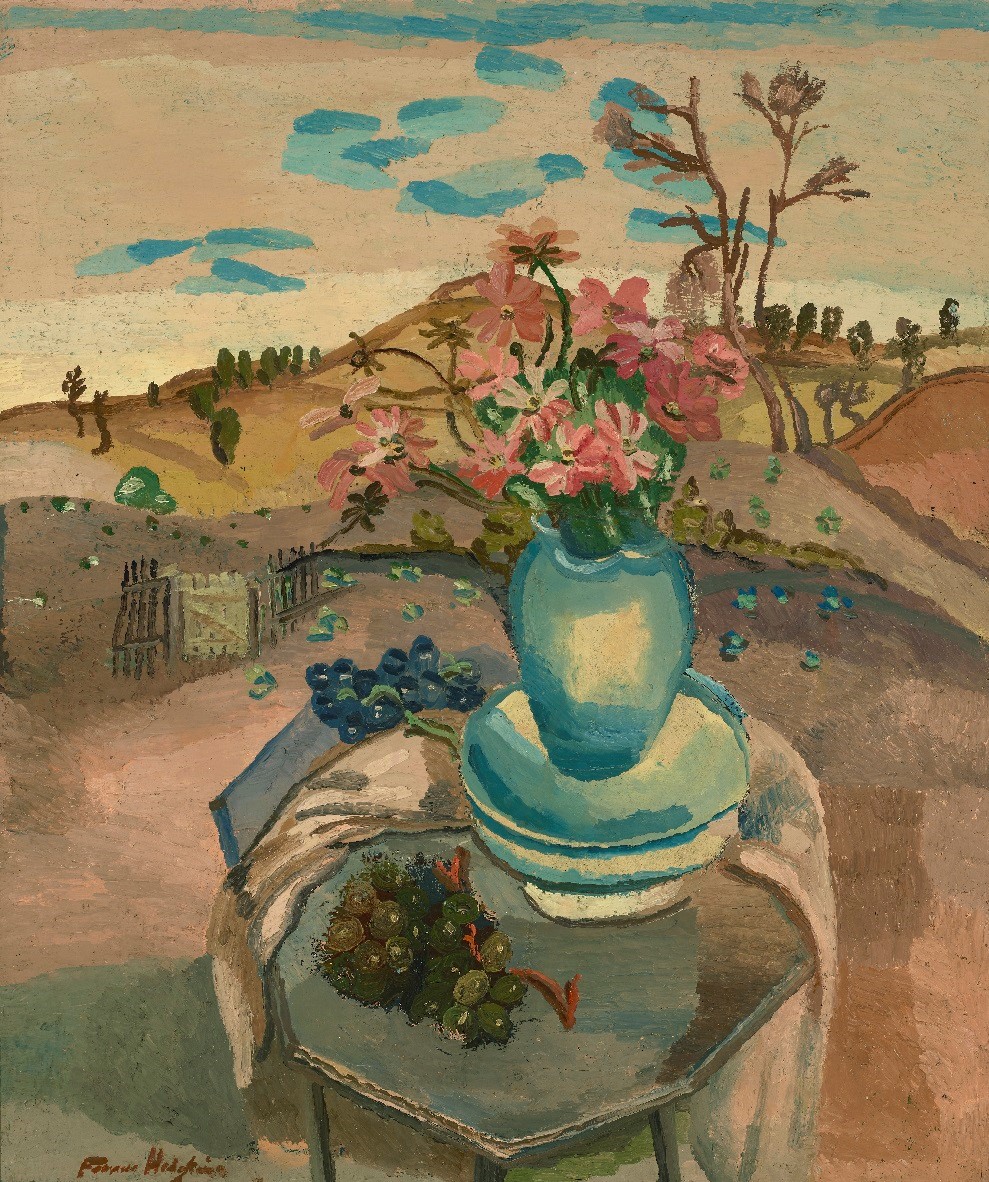
Frances Hodgkins Still Life in a Landscape, c. 1928The MFAT Collection. Source: New Zealand Parliament. No known copyright restrictions. Image source & rights
Look at how still-life objects and landscape can share a painted space. Try shifting the relationship between an object, its surroundings and its colour.
Compare a pictorial decision here with a contemporary model, then test a related method using your own subject.
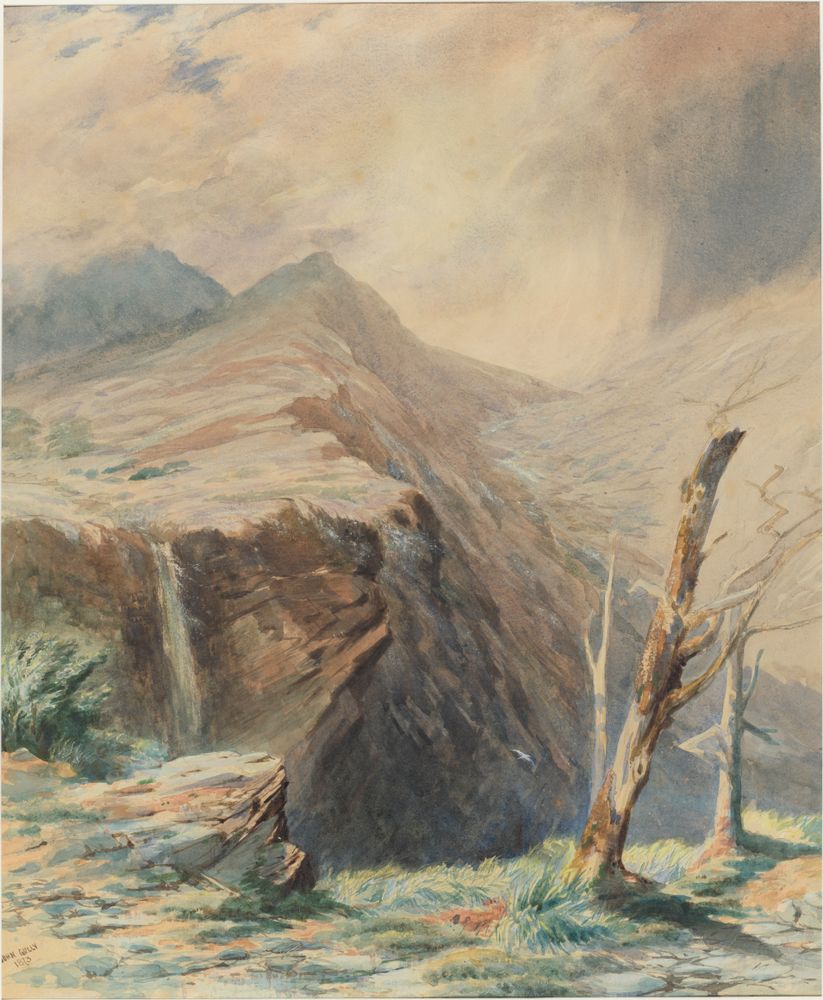
John Gully Landscape 1873, 1873Museum of New Zealand Te Papa Tongarewa. No Known Copyright Restrictions. Image source & rights
John Gully
Aotearoa New Zealand
Compare the light foreground, middle distance and mountains. Experiment with tonal steps and a limited palette to make space in your own observed place. Ask whose view of the landscape is represented.
Compare a pictorial decision here with a contemporary model, then test a related method using your own subject.
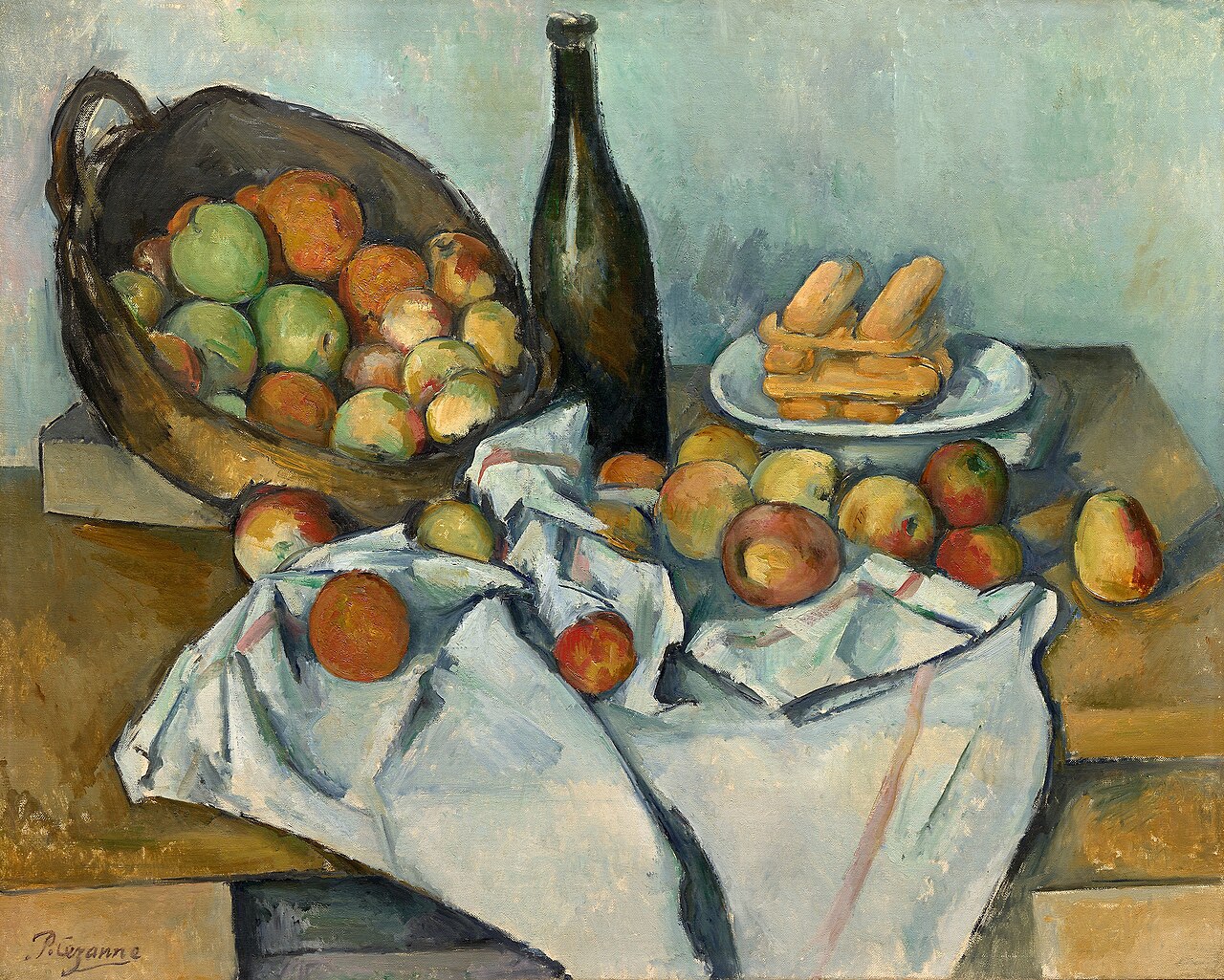
Study the tilted table, overlapping forms and repeated touches of colour in The Basket of Apples. Investigate how a stable object can sit inside an unsettled picture space.
Compare a pictorial decision here with a contemporary model, then test a related method using your own subject.
Look at Flight. Consider how carefully observed objects and a particular place can carry a personal response to change. Use your own objects, observations and experiences to find a different narrative.
Compare a pictorial decision here with a contemporary model, then test a related method using your own subject.
Follow the museum biography into the paintings. Investigate the relationships between landscape, intervals of light and dark, and text. If you use words, write your own and test their role as both image and meaning.
Compare a pictorial decision here with a contemporary model, then test a related method using your own subject.
Compare The Water-Lily Pond with other water-garden paintings linked by the National Gallery. Ask what changes when the horizon disappears or reflections become the subject. Work from your own location.
Compare a pictorial decision here with a contemporary model, then test a related method using your own subject.
Watch Tate’s curator-led Making Visible tour. Explore how line, coloured divisions and a repeated motif can become a personal visual system. Translate one observed subject rather than copying a finished Klee painting.
Compare a pictorial decision here with a contemporary model, then test a related method using your own subject.
The three artwork images reproduced on this site have a CC0 or No Known Copyright Restrictions statement at the linked source. Each caption names the artist, work, collection and rights source. Other artists link directly to resources showing their works and context. Contemporary artwork images remain at their source where a reproduction licence has not been confirmed.
Image licences do not override assessment conditions. In particular, the 2026 Level 1 and Level 2 external portfolios prohibit appropriated imagery. Use artist works for looking and discussion; generate your own source imagery for the painting tasks.
Contemporary Māori art includes distinct, evolving practices, not one shared look. Read each artist’s relationship to whakapapa, whenua, people and materials. Learn from pictorial decisions without treating culturally significant imagery or knowledge as a collection of motifs to copy. Discuss context and appropriate engagement with your teacher and relevant knowledge holders.
Painting investigations on this site are original teaching suggestions. The linked sources provide the artists’ works and contexts; the artists have not endorsed these tasks.
Artist references checked 22 November 2026. Fonts: Bricolage Grotesque and DM Sans, distributed under the SIL Open Font License. View font licences.